
Seagate ST2000DM001 Recovery with Severe Scratches on Every Platter Surface
Case Studies
Case Overview
| Item | Details |
|---|---|
| Recovery target | Seagate ST2000DM001, 2 TB |
| Symptoms | HDD not detected; abnormal noise |
| Diagnosis | Extremely severe platter scratches and magnetic coating damage |
| Category | Platter damage |
Initial Diagnosis and Recovery Process
Internal Inspection 1
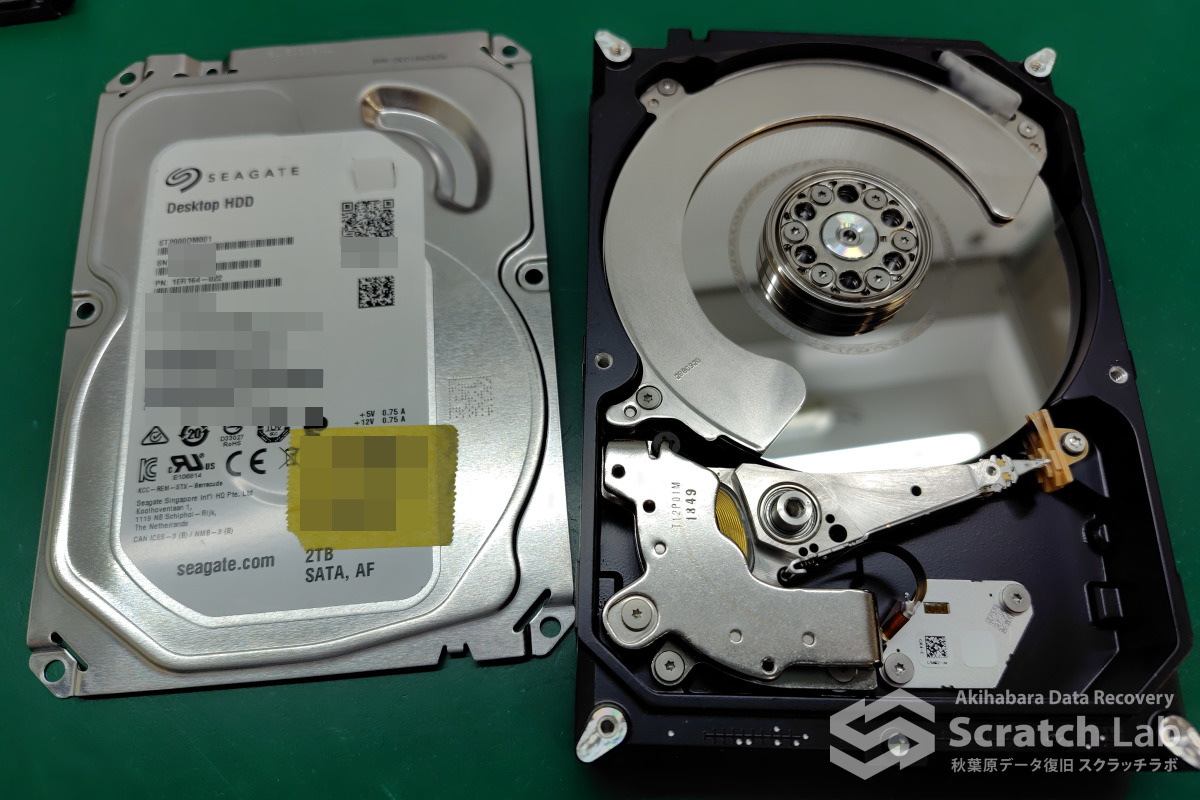
This HDD came to us after another provider had declared it unrecoverable. Because it arrived already opened, we began with an internal inspection.
If a platter is scratched or a head assembly is deformed, repeatedly powering the drive without first addressing the damage can enlarge existing scratches or create new ones. Either outcome further reduces the chance of recovery.
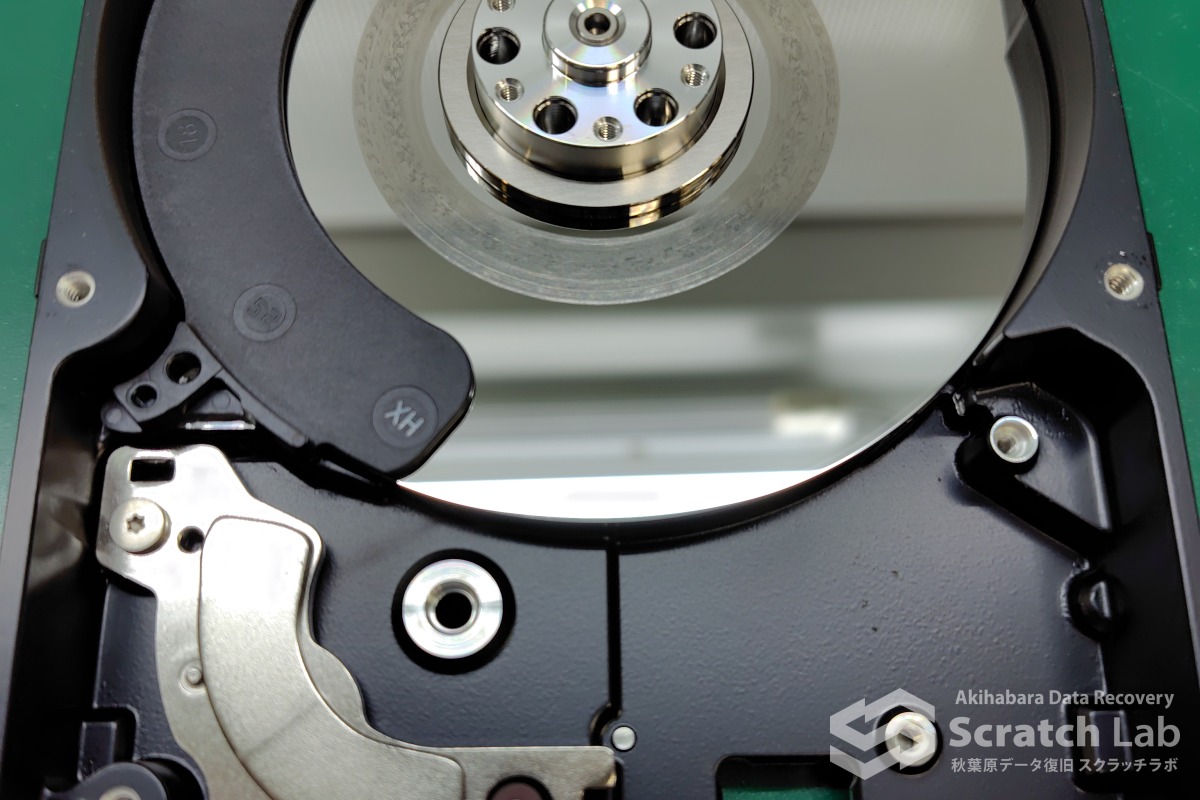
Removing the cover revealed a clearly defined circular scratch on the uppermost recording surface.
Internal Inspection 2
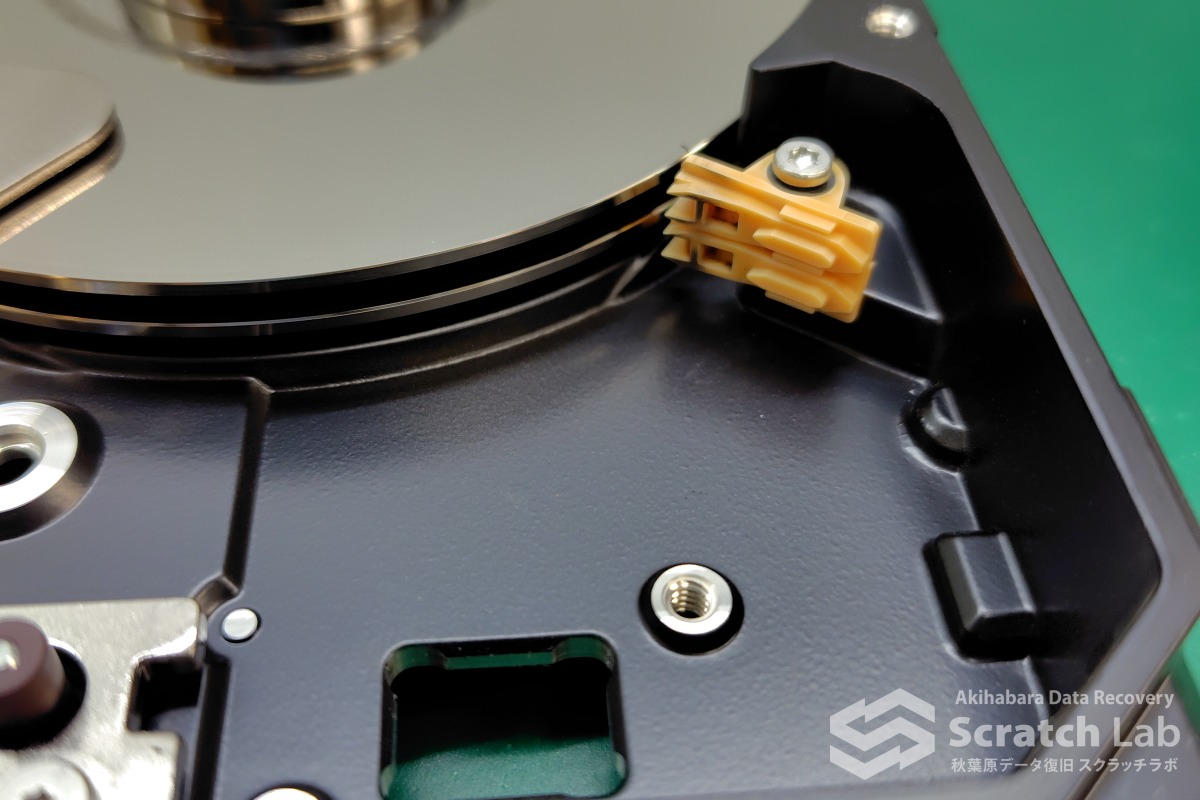
The next photograph was taken after the head assembly had been removed. The orange component is the ramp, where the heads are parked while the HDD is stopped. It had been blackened by debris from the damaged magnetic coating.
Internal Inspection 3
The following image was taken after removing the upper platter. It shows the upper recording surface of the lower platter. The damage was even worse than on the surface above: the scratch was exceptionally wide and deep—severe enough that most recovery attempts would reasonably be abandoned.
Recovery Work
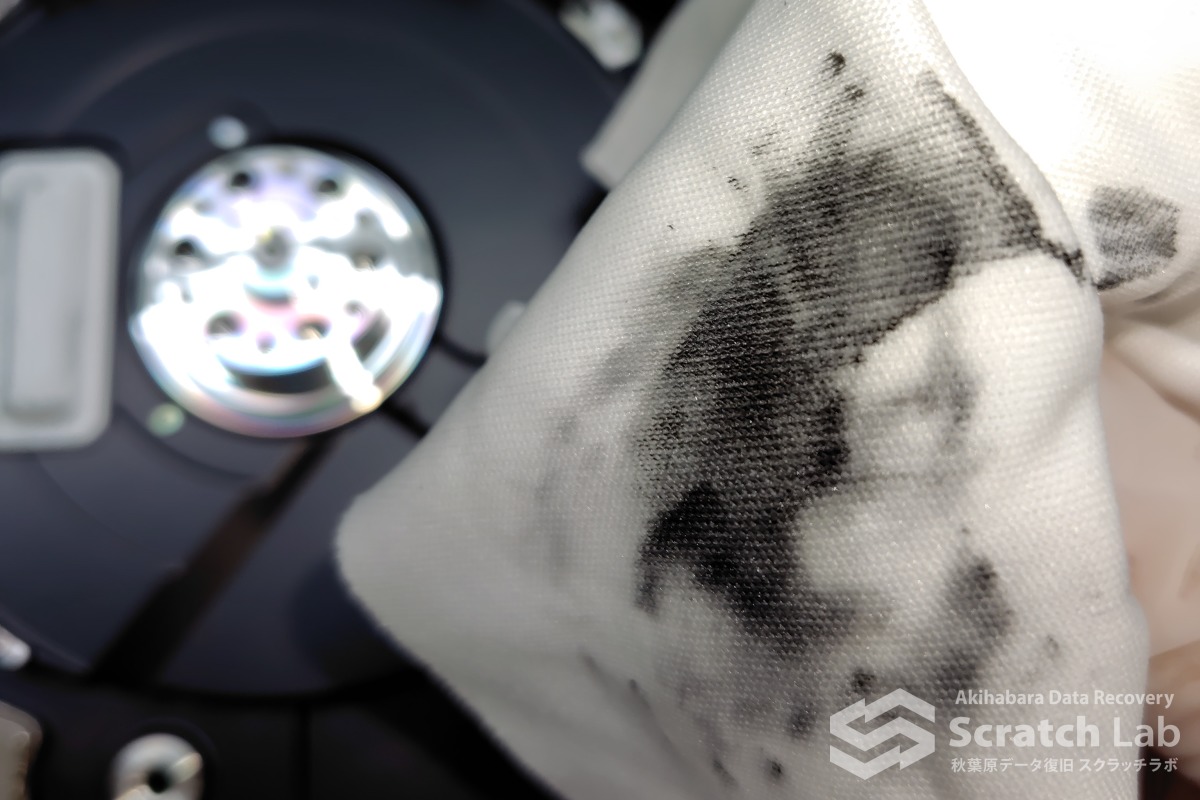
We cleaned the entire enclosure and both platters. The photograph above shows the cloth used to wipe the enclosure; it turned black from the contamination.
Scratch debris left on a platter will foul the heads, prevent them from operating correctly, and potentially create further damage. Meticulous cleaning was essential because debris had spread throughout the drive.
The photographs show only some of the surfaces. In reality, all four recording surfaces had scratches more than 2 mm wide. Because every surface was affected, the standard method of excluding only the damaged surface and imaging the others was not possible.
A simple head replacement would also have failed. The scratches were severe enough to destroy replacement heads almost immediately.
We therefore used a specialized startup and head-control method to bring the HDD into a state where imaging could proceed. This intervention goes beyond the standard procedure used for a typical platter-scratch case.
Recovery Result and Engineer’s Notes
Recovery Result
We recovered an exceptional 97.9% of the sectors in the data-bearing area.
Analysis of the image produced approximately 30,000 intact files totaling 40 GB, with their original folder structure preserved. Roughly 7,000 files totaling 180 GB contained one or more errors. Most of those were video files, and many still played successfully, although some contained intermittent visual or audio artifacts.
With physical damage this extensive, even areas that appear clean can contain smaller defects and generate read errors. The number of damaged files was significant, but the result was far better than the condition of the media initially suggested was possible.
From the Engineer
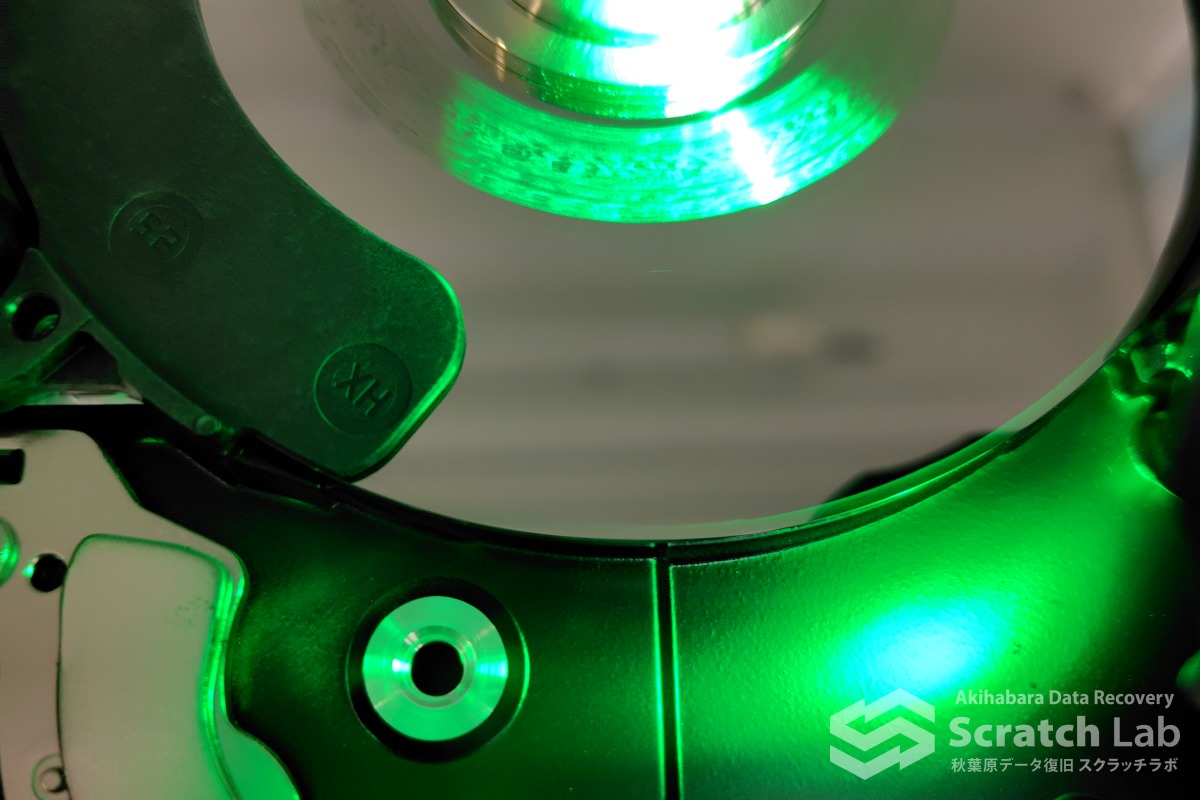
This Seagate drive belongs to the Grenada family. The damage appeared so severe that we initially doubted recovery would be possible. Under directed light, however, the inner portion of the lower platter was visibly destroyed while the outer tracks remained surprisingly clean. That observation persuaded us to attempt the recovery rather than declare the drive unrecoverable immediately.
Several favorable factors explain the 97.9% imaging result.
NTFS tends to allocate data from lower LBA ranges upward. Because the drive did not contain a large volume of user data, most of it was concentrated at lower LBAs. On this HDD, lower LBAs map from the outer tracks toward the inner tracks. The most destructive scratches therefore did not overlap heavily with the sectors containing user data.
We also had extensive practical experience with Grenada drives—the family most frequently affected by platter scratches—and had previously developed techniques for cases where inner-area damage must be bypassed.
The result could have been very different if this HDD had come from a NAS using XFS, which does not necessarily allocate data in increasing LBA order; if the drive had been almost full; or if the scratches had affected the outer tracks.
Limited additional power-on attempts also likely helped. The initial event may have allowed the drive to keep spinning long enough to create the severe scratches, but relatively few subsequent power cycles may have limited head movement and prevented further damage. The previous provider also appears to have stopped work quickly rather than attempting invasive measures after seeing the condition.
We have exceptional experience with Grenada-family models including the ST2000DM001, ST3000DM001, and ST2000DM006. If your drive has been declared unrecoverable because of severe platter damage, contact Scratch Lab for a second assessment.
About the Author

A.N
Certified Information Security Specialist. Began career as a technical officer with the National Police Agency, specializing in digital forensics. Recipient of multiple commendations, including the Director of Information and Communications Bureau Award and the Commandant's Award from the NPA Information and Communications School.
Subsequently joined a major data recovery firm before moving to FIX Inc., where he handles the full recovery workflow — from logical to physical failures — across HDD, SSD, flash memory, and RAID systems. His specialty is severe physical damage to HDDs; he manages nearly 100 scratch damage cases annually, successfully recovering data in the majority of them.