
Data Recovery from an Undetected Western Digital WD60EZAX
Case Studies
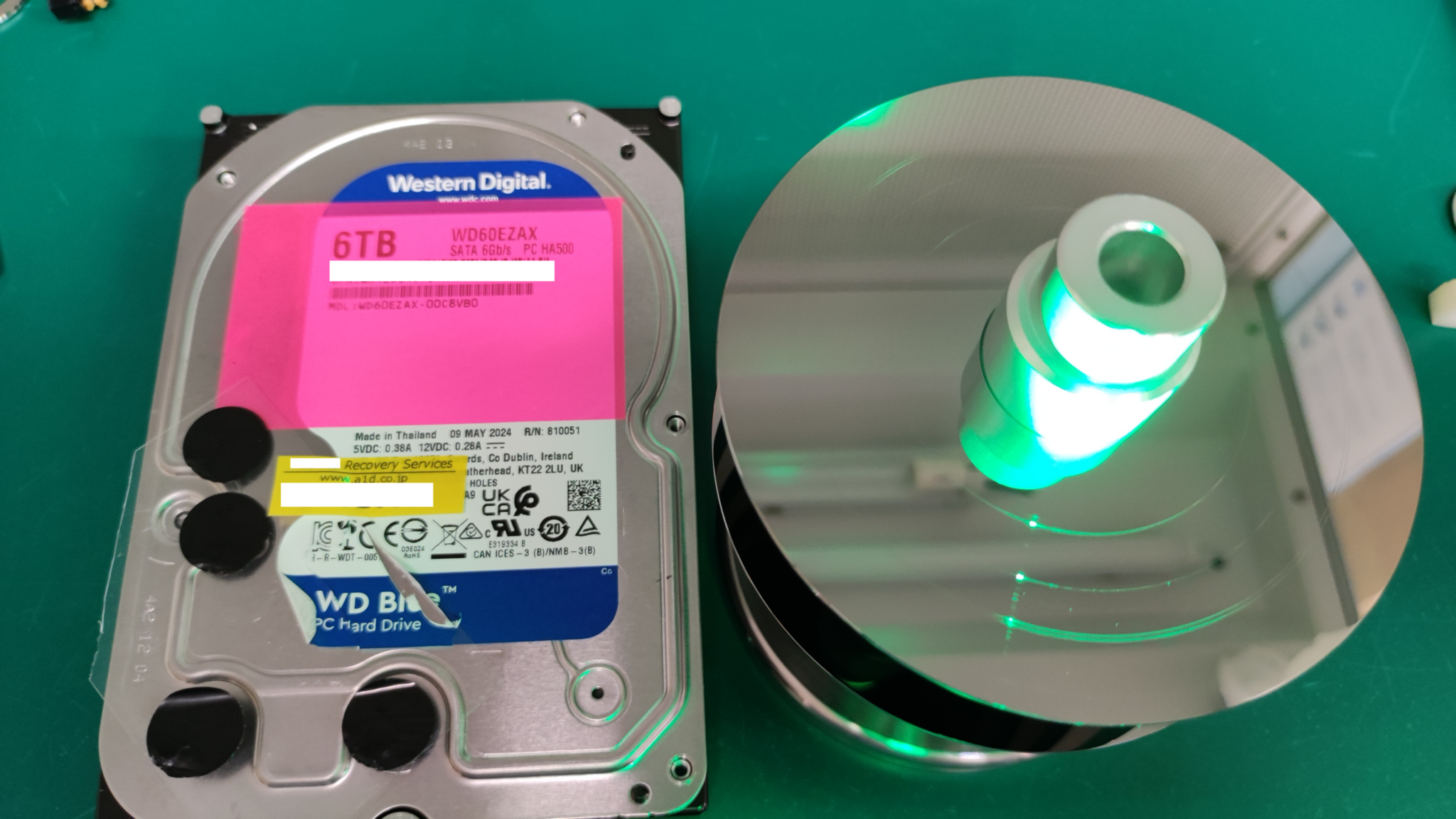
This case involved a Western Digital WD60EZAX HDD. Its family name is VeniceR Plus 2 Lite Plus—an unusual name containing “Plus” twice.
PC-3000 added basic support for this family in its February 2025 update, allowing connected drives to be identified correctly. At the time of this case, however, the practical recovery functions remained limited.
Platter-Scratch Case Previously Declared Unrecoverable (November 2024)
Symptoms and Diagnosis
The HDD was inaccessible. Even when connected externally over USB, it did not appear to spin. Because it arrived already opened, we began with an internal inspection and confirmed platter scratches and magnetic coating damage.
Turnaround Time
Approximately three months through final delivery
Recovery Result
We recovered the recent several months of data that the customer needed:
- Approximately 25,000 intact files, totaling about 40 GB
- Approximately 2,300 damaged files, totaling about 16 GB
Some of these files could not be restored with their original names or folder structure.
Recovery Process
Before reaching us, the HDD had reportedly been declared unrecoverable by two other providers. PC-3000 offered no support for the family at that time, so their decision was understandable. We also expected the case to be extremely difficult.
By chance, however, we had an identical model available in the lab. Experiments with that drive suggested that a recovery might be possible.
Because the patient drive had already been opened, we inspected the platters first. It contained three platters and used both sides of each, for six recording surfaces. One surface was scratched across virtually its entire area.
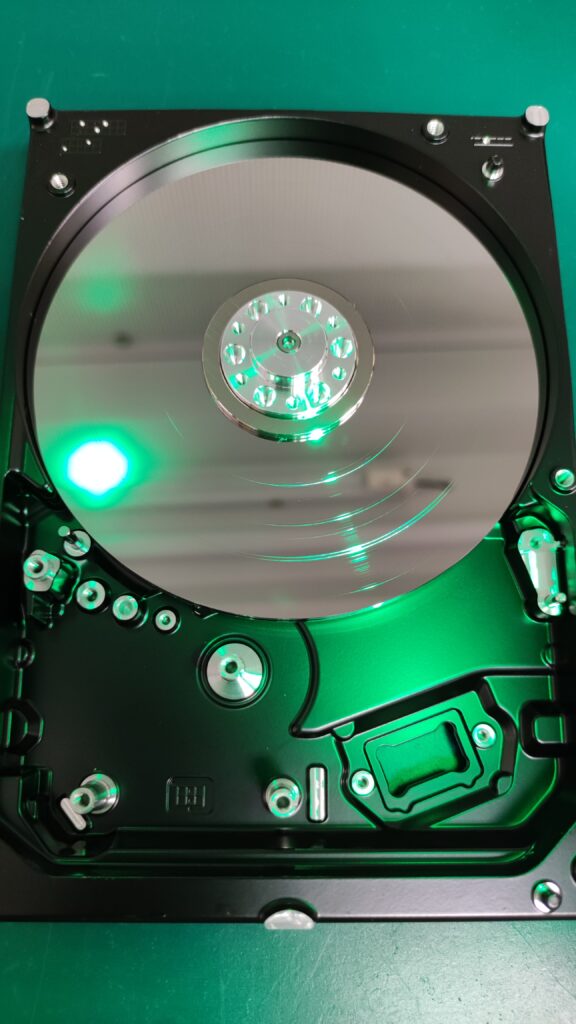
The original PCB also showed signs of soldering work, although we did not photograph it. Because the reported symptom was “no apparent spin,” an earlier provider likely suspected PCB failure first. A board replacement—together with transfer of the drive’s unique adaptive data—would not have improved the condition, potentially making diagnosis more difficult.
Recent Western Digital HDDs can be particularly challenging. On these models, an electrical failure in even one head can prevent the motor from spinning up. This drive had six heads, one for each recording surface. The old diagnostic shortcut—“no clicking and no spin means PCB failure”—therefore no longer applies reliably.
Traditional HDDs often click when a head fails. Some recent WD models, however, can have a failed head without producing abnormal noise. In such cases, platter damage like the scratch seen here may still be present. This behavior may serve as a protective mechanism intended to prevent a failed head from creating additional damage.
The affected surface was too severely scored for a simple head replacement. Replacement heads might allow one spin-up, but they would fail before data imaging could begin.
Because PC-3000 did not support this family, our options were limited. By combining existing functions with a custom intervention, however, we succeeded in bypassing the scratched surface.
We recovered 66.8% of the data-bearing area. Only 47.3% of the file-system metadata area could be read, so fewer than half of the files could be reconstructed with their original names and folder structure. Even so, the customer was extremely pleased with the recovered material, making the extended effort worthwhile.
The file-system metadata area is relatively small, so the proportion recovered often depends heavily on where the physical damage happens to fall. In one platter-scratch case it may be recovered completely; in another, it may be lost entirely. This metadata is essential for restoring file names and folder structure, yet its condition cannot be known until the drive has been stabilized and imaging has begun. It can have a decisive effect on the final result.
Accessing the drive’s service area revealed the family identifier VENRP2LP in one of the firmware modules.
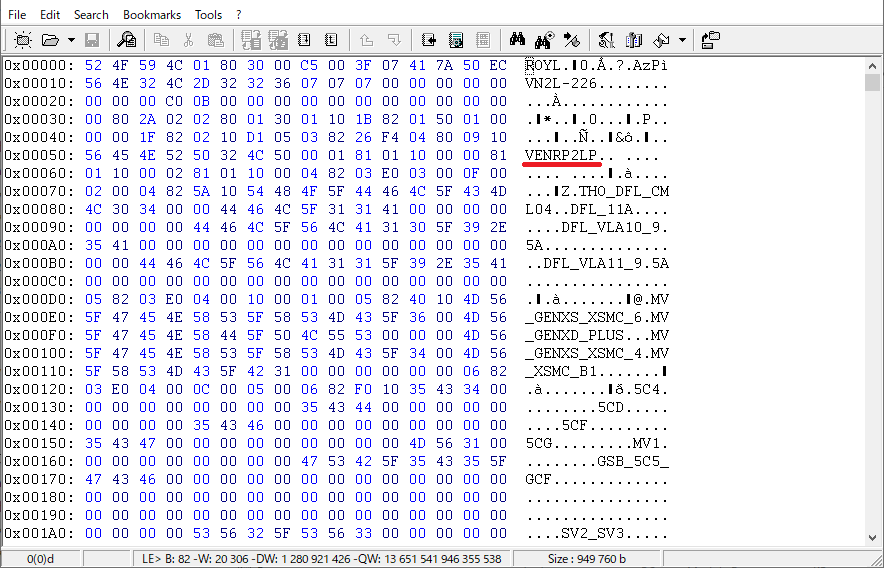
At the time, we already knew of a family called VeniceR Plus 2 Lite and wondered whether the final “P” could possibly stand for another “Plus.” PC-3000’s later update confirmed that it did.
Even after the February 2025 update, the available tooling did not provide a complete solution for severe platter damage on this model. If you have exhausted other options, however, the technique used in this case may still offer a path to recovery. Contact Scratch Lab for an individual assessment.
About the Author

A.N
Certified Information Security Specialist. Began career as a technical officer with the National Police Agency, specializing in digital forensics. Recipient of multiple commendations, including the Director of Information and Communications Bureau Award and the Commandant's Award from the NPA Information and Communications School.
Subsequently joined a major data recovery firm before moving to FIX Inc., where he handles the full recovery workflow — from logical to physical failures — across HDD, SSD, flash memory, and RAID systems. His specialty is severe physical damage to HDDs; he manages nearly 100 scratch damage cases annually, successfully recovering data in the majority of them.