
Data Recovery from a Dropped I-O DATA HDCL-UTE3W (WD30EZRZ)
Case Studies
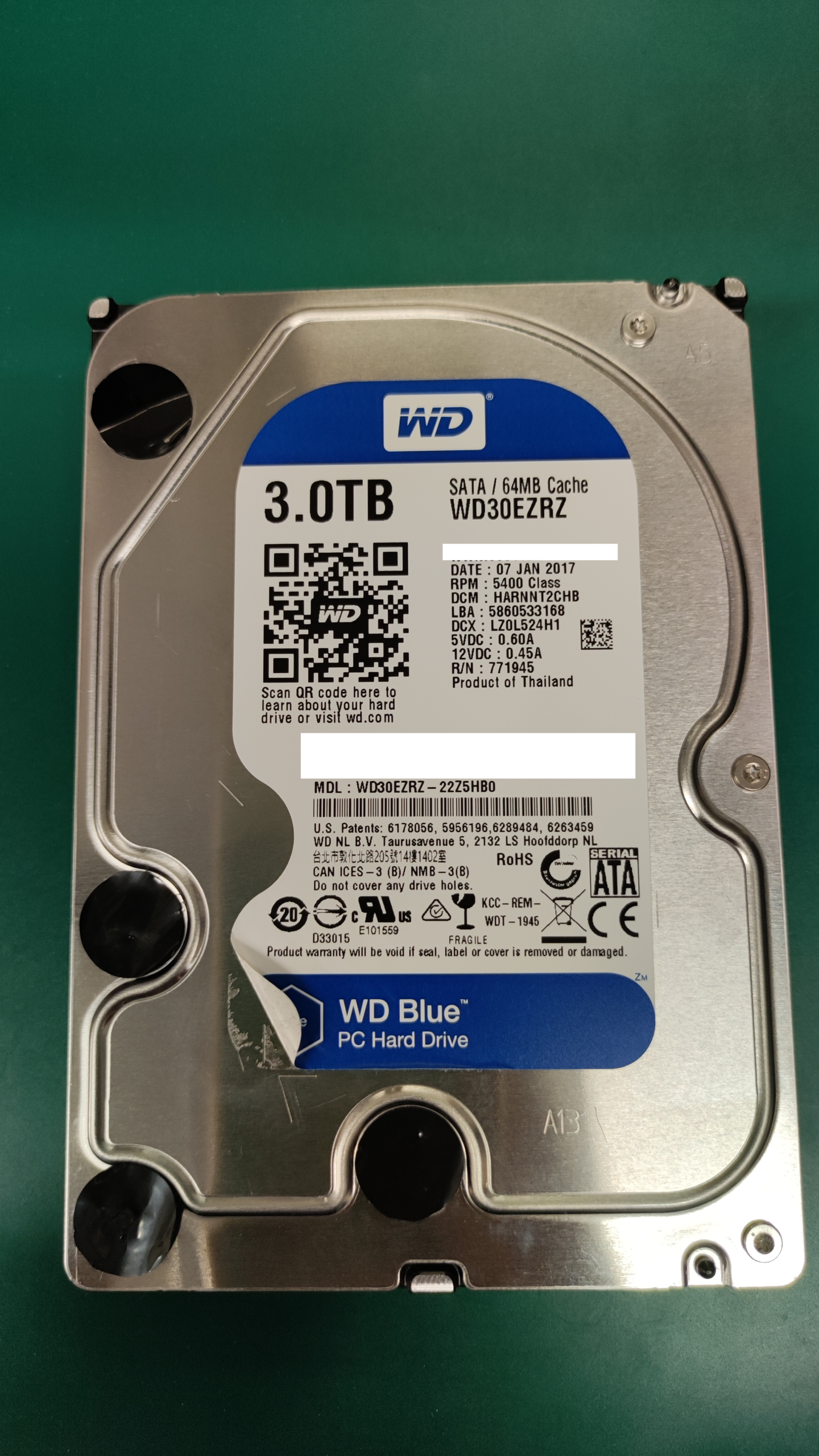
Platter Scratches and Magnetic Coating Damage (March 2024)
Symptoms and Diagnosis
After being dropped, the HDD made abnormal noises and was no longer detected. Inspection confirmed platter scratches and magnetic coating damage.
Turnaround Time
Approximately two weeks
Recovery Result
Approximately 230 GB of intact data, totaling around 32,000 files
Recovery Process
The device was an I-O DATA HDCL-UTE3W external hard drive containing a Western Digital WD30EZRZ-22Z5HB0.
After removing and powering the internal HDD, we heard a whirring and scraping sequence twice. This behavior can occur when the read/write heads have failed and can no longer determine their position over the platters.
We then opened the drive for inspection.

The head assembly was severely deformed. The third and fifth suspension arms from the bottom had bent tips, and several heads were missing the small black rectangular component known as the slider. The damage suggested a particularly hard impact.
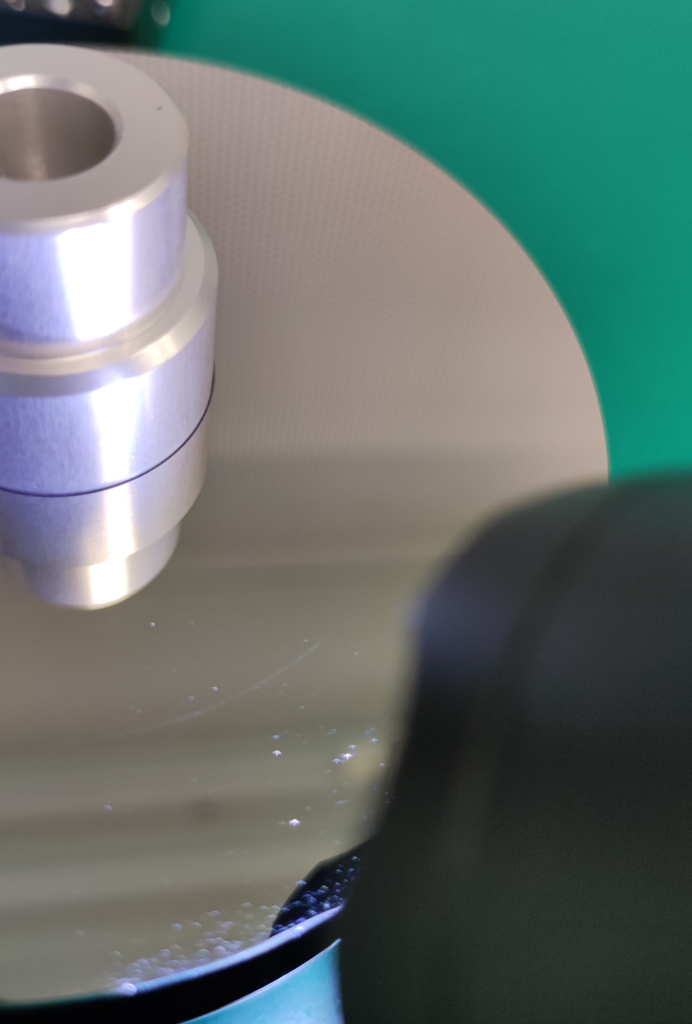
The first platter photograph shows loose particles on the recording surface. This was plastic debris produced when the impact forced the platter into contact with the ramp, where the heads are parked while the drive is stopped.
Lines are visible near the inner diameter and midway toward the outer edge. These were not yet scratches; they were accumulations of plastic debris. Attempting to read the drive in this condition would almost certainly have caused the heads to drag the debris across the recording surface, creating new scratches and stripping away magnetic material. Thorough platter cleaning was therefore essential before imaging.
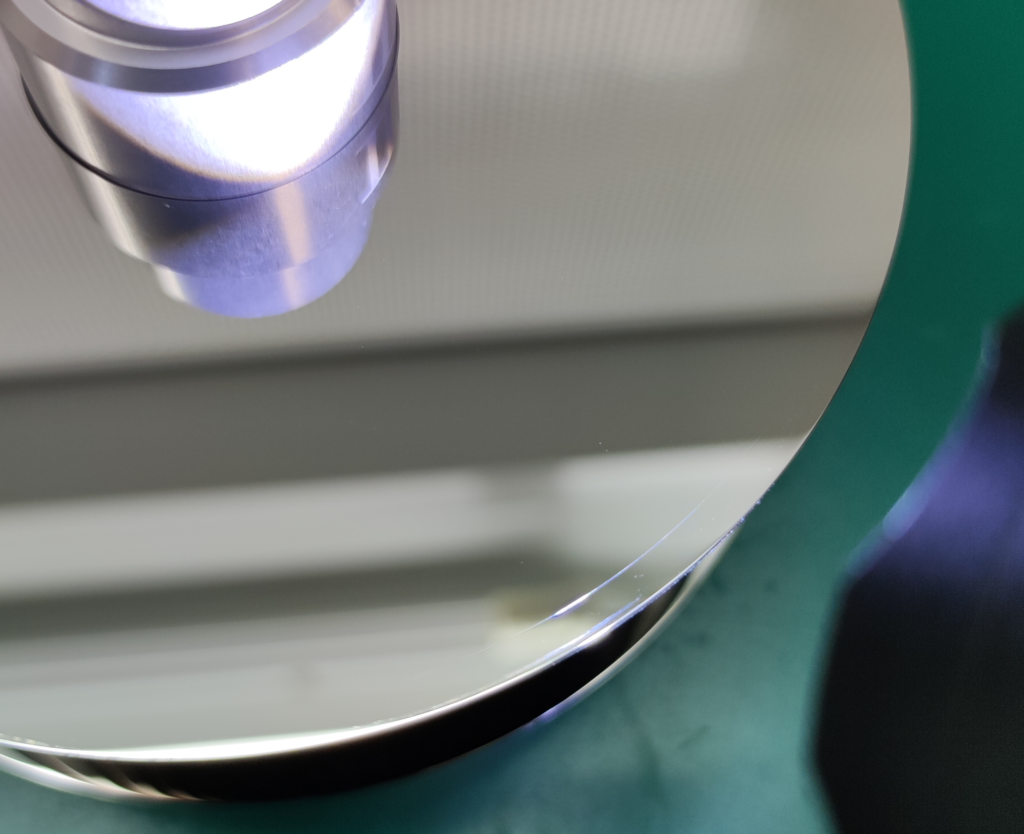
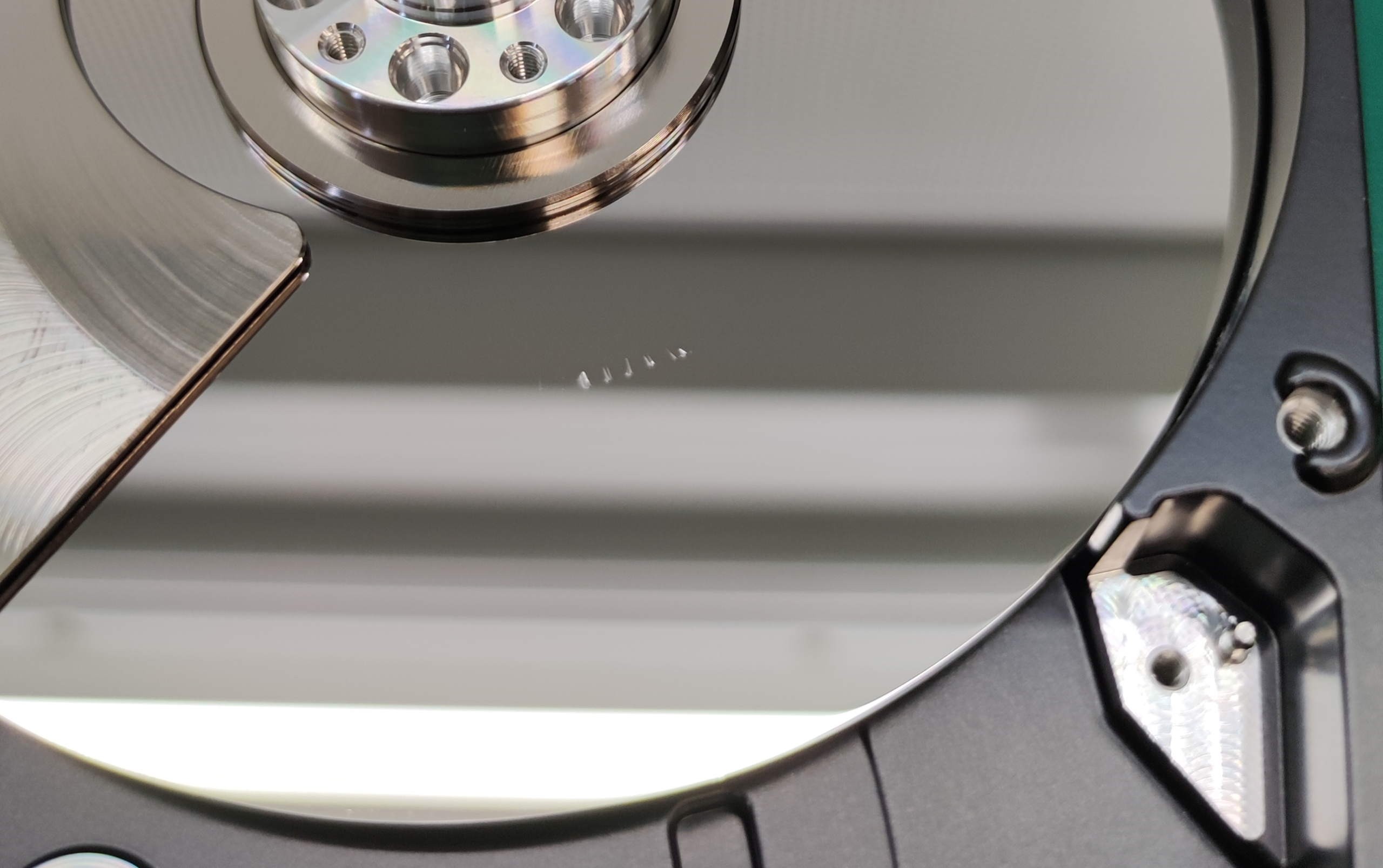
These images show a surface that had sustained actual damage. The upper image shows damage near the outer portion of the platter. The lower image shows a row of six pronounced pits.
The outer scratch was not visually dramatic, but its position made it especially problematic. HDDs generally write data from the outer tracks inward. On a Windows-formatted drive, early logical areas commonly contain file-system metadata such as file names, sizes, timestamps, and references to the sectors where file content is stored.
Damage near the outer tracks can therefore destroy the metadata needed to identify extracted data and reconstruct the original file and folder structure. Even if the critical metadata happens to be stored on another surface—as it was in this case—damage at the same radial position can still interfere with reads from other surfaces.
The six pits in the lower photograph were unusually deep. Any head passing directly over them would be at high risk of immediate failure. To image this surface, we first prevented the heads from crossing the damaged zone and read the outer-area data. Only after that stage did we attempt sectors near the pits.
The customer’s priority data consisted of photos and videos. Photos were generally recoverable, but large video files are particularly vulnerable in platter-damage cases. Because damaged zones must be skipped and smaller defects often remain scattered across the surface, some sectors cannot be read. The larger the file, the greater the chance that at least part of it occupies an unreadable sector.
We recovered approximately 230 GB of error-free files. To be fully transparent, however, this drive contained many video files larger than 1 GB, including some tens of gigabytes in size. By capacity, approximately 1.6 TB consisted of damaged files with missing data, although that represented only around 1,300 files.
Most of those videos could still be played despite partial corruption, so the recovery remained valuable to the customer. After reviewing the result, the customer approved delivery.
Although many of the scratch cases featured on our site involve Seagate drives, Scratch Lab also has extensive experience recovering Western Digital HDDs with platter scratches and magnetic coating damage. We do not charge an additional fee merely because another provider has already opened the drive.
About the Author

A.N
Certified Information Security Specialist. Began career as a technical officer with the National Police Agency, specializing in digital forensics. Recipient of multiple commendations, including the Director of Information and Communications Bureau Award and the Commandant's Award from the NPA Information and Communications School.
Subsequently joined a major data recovery firm before moving to FIX Inc., where he handles the full recovery workflow — from logical to physical failures — across HDD, SSD, flash memory, and RAID systems. His specialty is severe physical damage to HDDs; he manages nearly 100 scratch damage cases annually, successfully recovering data in the majority of them.